
Project Tapestry · Workshop Report
A report from the first Project Tapestry planning workshop in Paris.
For the past three years, frontier AI has been consolidating into fewer and fewer hands. The most capable foundation models are increasingly built by a small number of centralized labs, trained on data most communities cannot inspect, and deployed through systems most countries, industries, institutions, and individuals cannot fully control.
Project Tapestry is the AI Alliance's effort to build a different path: a global, open, sovereign approach to frontier foundation models.
The Thesis
There is no meaningful sovereignty without frontier performance. The frontier itself can only advance if collaboration expands.
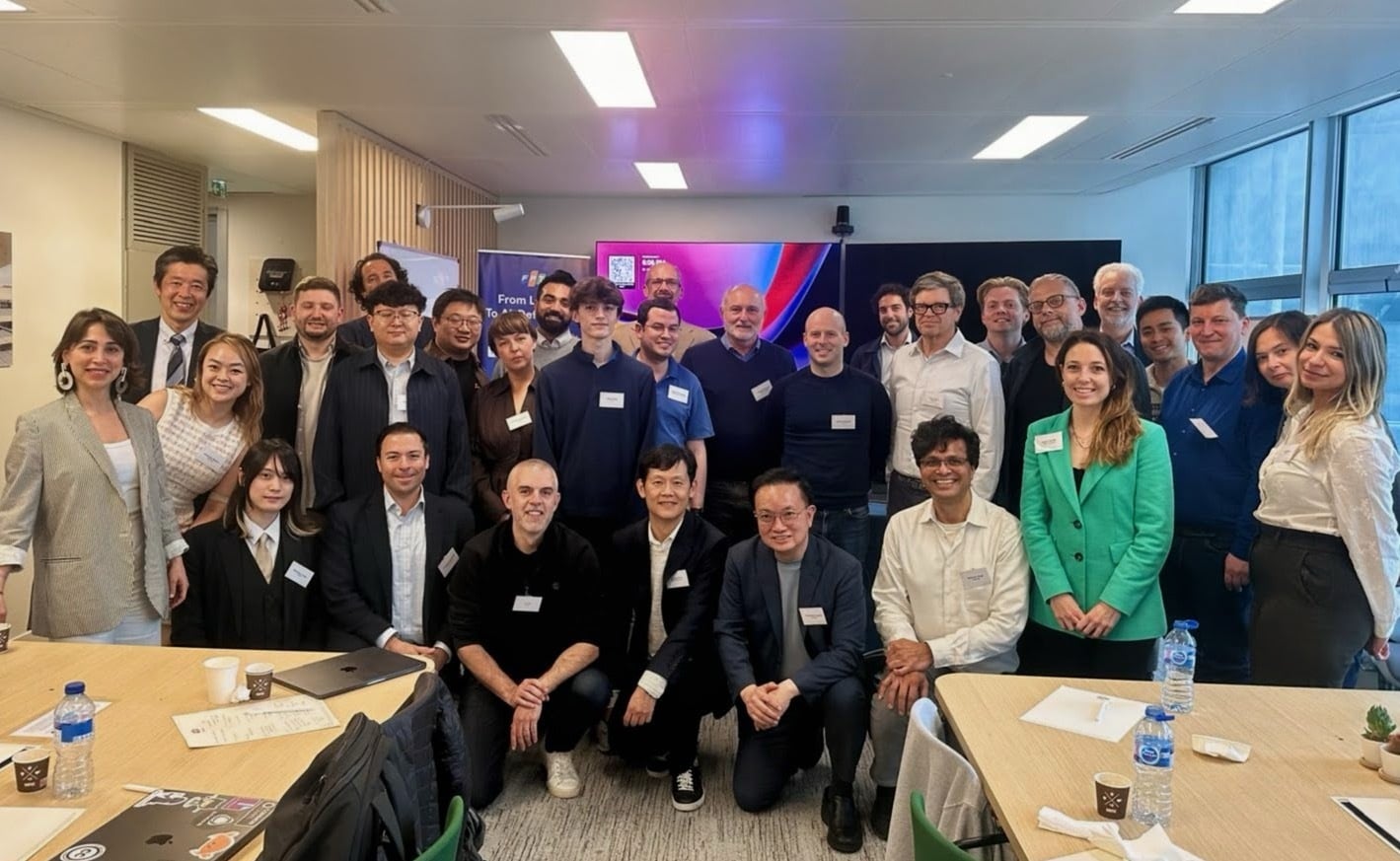
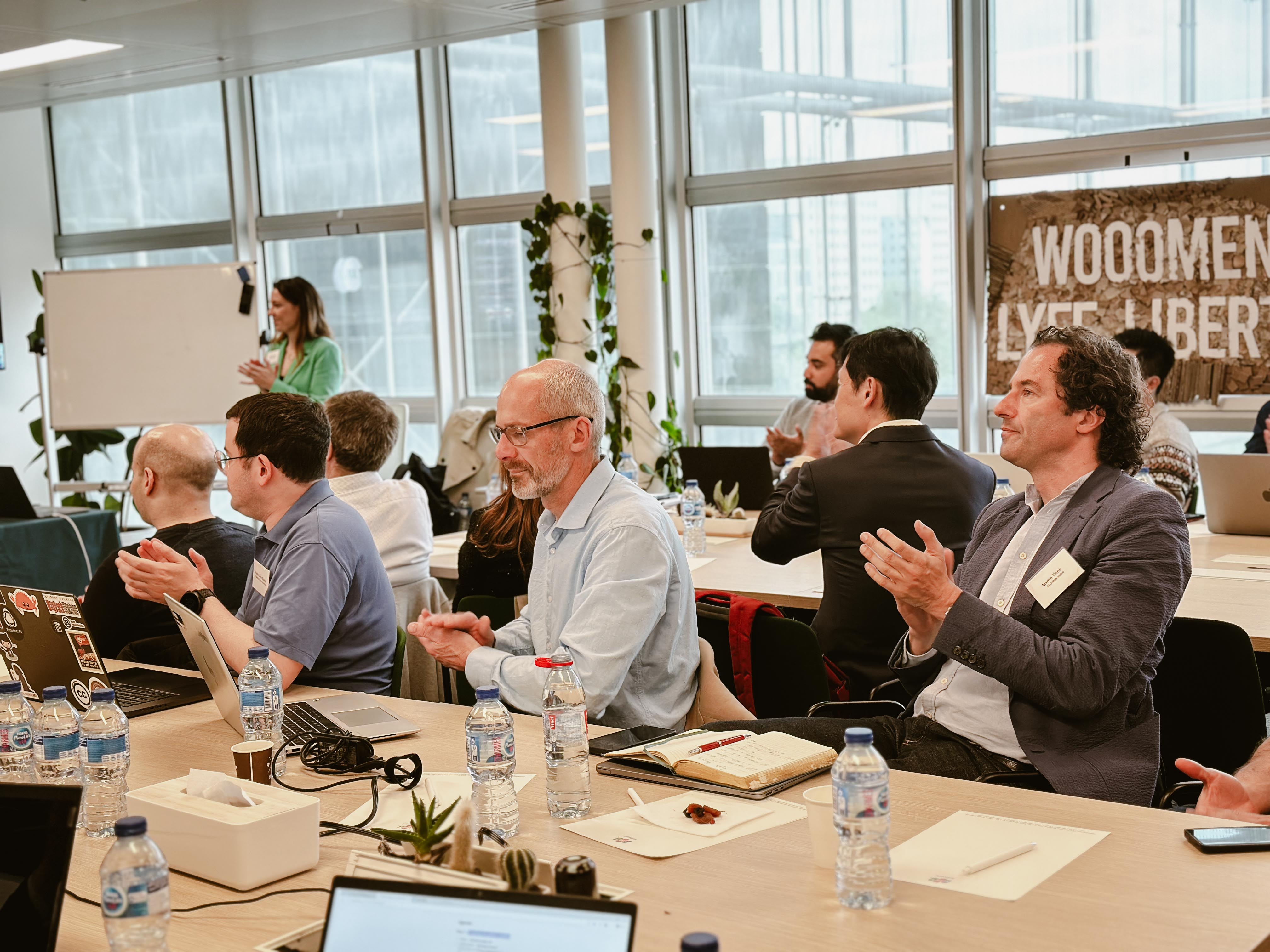
On May 7–8, 2026, the AI Alliance convened roughly 30 AI researchers, technical leaders, and institutional partners in Paris for the first Tapestry planning workshop. The goal was not simply to discuss sovereign AI, but to begin turning it into a technical architecture, an operating model, and a concrete roadmap.
The workshop produced four early outcomes: an initial architecture for consortium-based frontier model development; a shared commitment to sovereign data, compute, and downstream adaptation; early workstreams around cultural alignment, distributed weight updates, and global data cataloging; and a path toward an organizational model hosted through the AI Alliance's nonprofit structure.
The work is now moving from concept to execution.
Why sovereign AI needs frontier capability
Sovereign AI is often framed as a matter of national control. That is important, but the full idea is broader.
Sovereignty means that countries, industries, institutions, communities, and individuals can shape, adapt, deploy, and govern AI systems according to their own data, laws, values, languages, infrastructure, and domain needs. It includes national sovereignty, industrial sovereignty, data sovereignty, cultural sovereignty, scientific sovereignty, economic sovereignty, and personal agency.
But control alone is not enough. If sovereign AI systems are significantly less capable than the leading frontier systems, users will not adopt them at scale. Governments, enterprises, researchers, developers, and citizens will continue to rely on models built elsewhere, even when those models do not fully reflect their priorities or constraints.
That creates an uncomfortable choice. One option is to depend on models built by external frontier labs, with limited ability to inspect, adapt, or govern them. The other is to go it alone, building sovereign models that may be locally controlled but struggle to compete at the frontier of capability.
Project Tapestry proposes a third path.
The idea is to bring together data, compute, talent, and institutional commitment from a global consortium of partners to build frontier-capable foundation models that no single participant could build alone, while preserving each participant's ability to control its own data, operate sovereign derivatives, and adapt models to local needs.
The result is not one model to rule them all. It is a shared base for many sovereign futures: national models, industry models, domain models, cultural and language models, and institutional models, each built from a common foundation and adapted by the communities that use them.
From New Delhi to Paris
The idea for Project Tapestry began to take shape alongside the AI Impact Summit in New Delhi, India, where the AI Alliance hosted an event called Scaling Intelligence Outward.
The question was direct: how can the global open and sovereign AI community coordinate at a scale large enough to matter?
Yann LeCun, who joined the AI Alliance as Chief Science Advisor in April, helped frame the opportunity. AI is becoming infrastructure, and infrastructure trends open. The challenge is not only technical capacity. It is coordination.
In the weeks that followed, a small team from the AI Alliance moved quickly to turn the idea into a planning process. The Paris workshop was the first step.
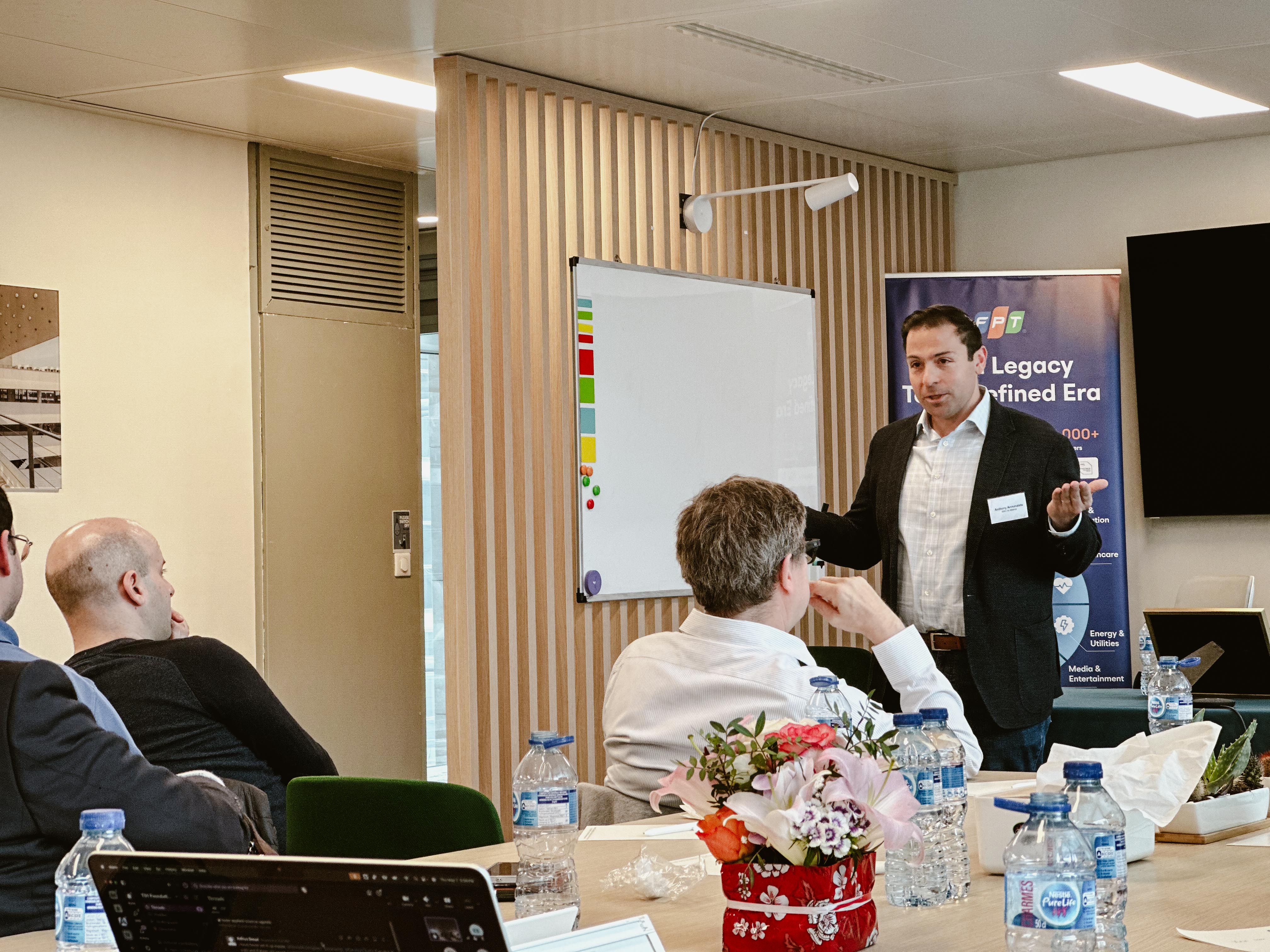
Hosted at the Paris headquarters of FPT Software, a proud AI Alliance member from Vietnam, the workshop brought together model builders, data experts, cultural alignment researchers, open-source leaders, institutional partners, and sovereign AI initiatives from around the world.
Dr. Agata Ferretti of IBM and Head of the AI Alliance Europe orchestrated two days of structured sessions focused on architecture, data, compute, alignment, governance, and the path to first demonstrations.
The setting mattered. FPT's headquarters, where elements of Vietnam's rich cultural heritage were visible throughout the space, served as a reminder that sovereignty is not only technical or national. AI systems shape how people work, learn, create, govern, and communicate. They must be capable of reflecting many different societies, industries, languages, values, and domains.
Tapestry starts from that premise: frontier AI should be shaped by a broader cross-section of humanity.
The workshop: speaker by speaker
What follows is a short walkthrough of the major sessions across the two days, with attribution to the people and organizations helping shape Project Tapestry from the beginning.
Day 1 — Open and Sovereign AI Today
Yann LeCun
Chief Science Advisor, AI Alliance · Chairman, AMI Labs
Yann LeCun opened by framing AI as infrastructure, and infrastructure, over time, tends to become open.
For countries, research institutions, enterprises, and communities that want to shape the future of AI rather than simply consume what arrives from elsewhere, the path forward is collaboration at frontier scale. LeCun described federated training as one possible mechanism: contributors retain sovereignty over their data while pooling capability through the model itself.
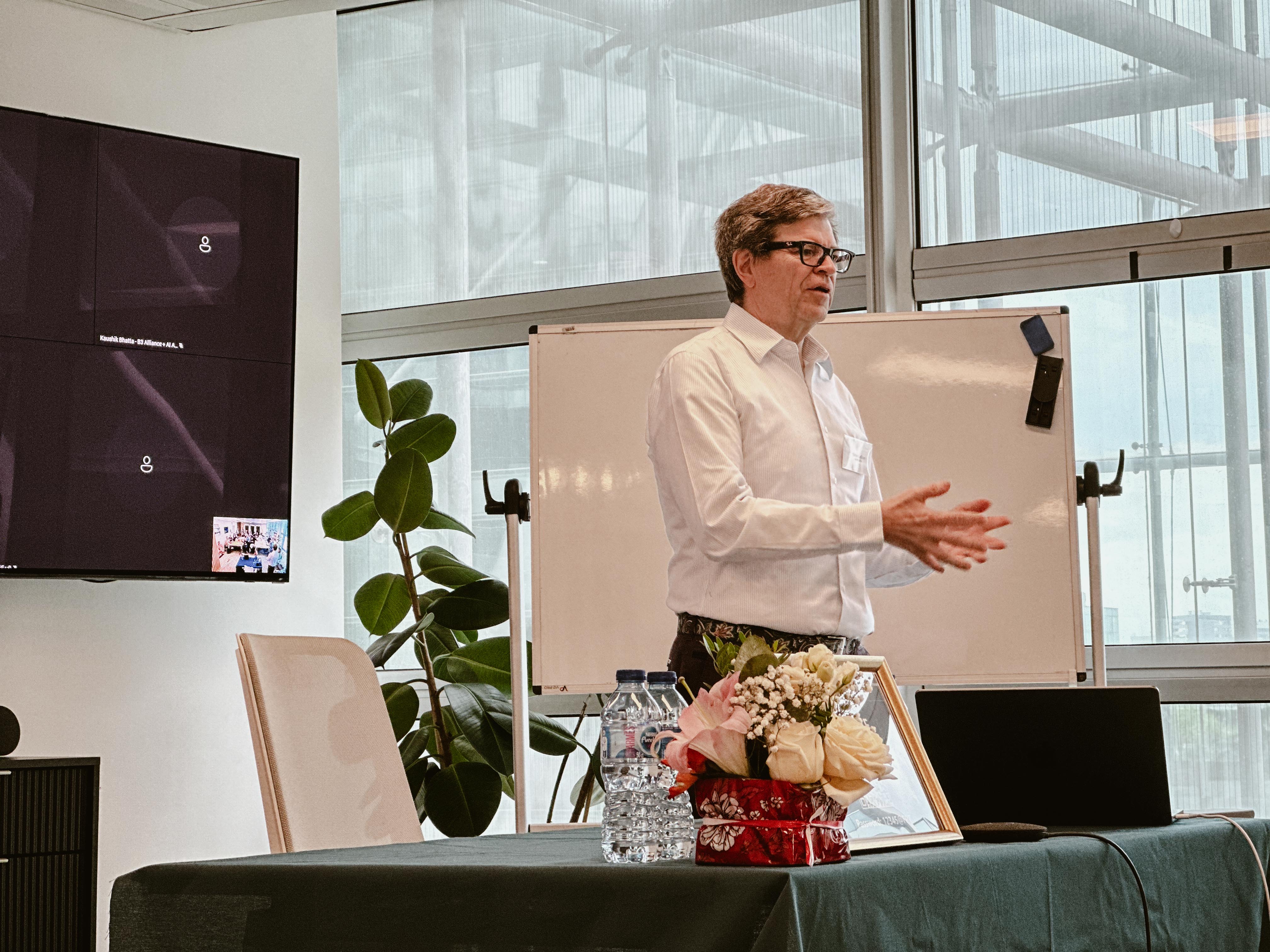
The core message was that no single lab can, or should, train the world's foundation models alone. Tapestry is designed to test whether a global coalition can build frontier AI infrastructure that is open, collaborative, and sovereign by design.
Antoine Bosselut
EPFL · Swiss AI Initiative · Apertus
Antoine Bosselut walked through Apertus, the Swiss flagship open model effort, as a concrete example of national and regional sovereign AI development.
The lessons for Tapestry were direct. A coalition needs a clear reason to exist beyond producing another model. It must manage expectations carefully. And it must build durable data and evaluation pipelines that support not only the first model, but the second and third. For Apertus, the emphasis was responsible data practice and multilinguality. For Tapestry, the "special sauce" is global sovereign collaboration.
Hector Liu
MBZUAI · K2 Initiative
Hector Liu presented a practical view of end-to-end provenance in model development. In a sovereign AI setting, provenance is foundational. If a government, institution, or community later needs to audit or remove the influence of a specific corpus, the development process must be able to trace checkpoints and model behavior back to training data.
Liu also discussed K2's upcoming model series as a possible reference point for the consortium, including models across multiple sizes that share a tokenizer and support cross-size distillation. The lesson: sovereign AI requires not only local control, but traceable model development.
Ayah Bdeir
Current AI
Ayah Bdeir reframed the work as a potluck rather than a race. In a race, everyone competes to finish first. In a potluck, each participant brings something distinct, and the collective result is richer than what anyone could produce alone.
Current AI's work focuses on funding, building, and investing in public-interest AI infrastructure. Bdeir positioned Current AI as a potential partner for the connective tissue that coalitions need but no single institution naturally owns: interoperability, maintenance, funding pathways, and shared public-interest infrastructure. For Tapestry, this reinforced an important point: the model is only one part of the project. Durable collaboration requires durable support systems.
Anthony Annunziata
AI Alliance & IBM · Day 1 Close
Anthony Annunziata closed Day 1 by naming the central coalition challenge as collaboration design, not capacity. The institutions represented in the room collectively hold significant data, compute, talent, funding, and open-source experience. The question is whether those assets can be organized into a shared operating model without erasing what makes each contribution distinctive.
The close surfaced four blockers that Tapestry exists to address: data, compute, funding, and people / governance. The message was that Tapestry must become more than a model project. It must become a collaboration system for sovereign contributors.
Day 2 — Architecture, Contributors, and the Path Forward
Ganesh Ramakrishnan
BharatGen · IIT Bombay
Ganesh Ramakrishnan opened Day 2 with a concrete demonstration that country-scale sovereign AI can work when backed by serious national commitment.
BharatGen brings together public funding, academic partners, engineering capacity, national compute, multilingual data, and a not-for-profit operating structure. Its development philosophy is "agentic all the way": agents at every stage of the model development pipeline, with humans in the feedback loops.
For Tapestry, BharatGen provided an important proof point. Sovereign AI is not just a policy aspiration. It can become a functioning national-scale technical program when funding, compute, data, and institutions are aligned.
Michitaka Tsuda
Open Data Spaces · IPA Japan
Michitaka Tsuda argued that the next breakthroughs in AI will not come only from the open web. Much of the world's most valuable data sits inside organizations: operational data, industrial data, scientific data, institutional records, and domain-specific knowledge governed by legal, commercial, or cultural constraints. This data often cannot simply be moved into a centralized training pipeline.
Tsuda presented Open Data Spaces as a distributed and trusted data-sharing architecture using cryptographic identification, decentralized identifiers, semantic caches, and ontology interoperability. The data-side lesson was closely aligned with Tapestry: sovereignty requires technical mechanisms for trusted participation without unnecessary loss of control.
Roberto Di Cosimo
Software Heritage
Roberto Di Cosimo presented a vision for Code Commons as a foundation for transparent and responsible AI training data.
He highlighted the problems arising from undisclosed training data, including limited model inspection, loss of user freedom, and difficulties with provenance and integrity. Software Heritage contributes towards a solution: with over 50 billion artifacts and one trillion edges, the organization's unique infrastructure provides availability, integrity, and traceability for source code, a critical component of AI training.
For Tapestry, the key lesson was that the project's sovereign code-data layer must be built on a foundation of transparency and neutral governance, leveraging existing efforts like Software Heritage.
Christopher Nguyễn
Aitomatic · Co-organizer
Christopher Nguyễn gave the workshop its sharpest architectural framing and named one of Tapestry's load-bearing principles: anti-capture.
Sovereign AI efforts today face two unattractive choices: closed lock-in to a frontier lab, or going it alone and producing models that may not be capable enough to gain broad adoption. Tapestry's third path is what Nguyễn described as an "N+1" or "Core Plus a Sovereign" architecture: a shared base model, plus many sovereign adaptations.
A base model is trained through the consortium. Participating nodes continue training it on local or sovereign data. Weight updates, rather than raw data, can be returned for review and aggregation. Post-training, domain specialization, cultural grounding, safety work, and deployment can happen locally.
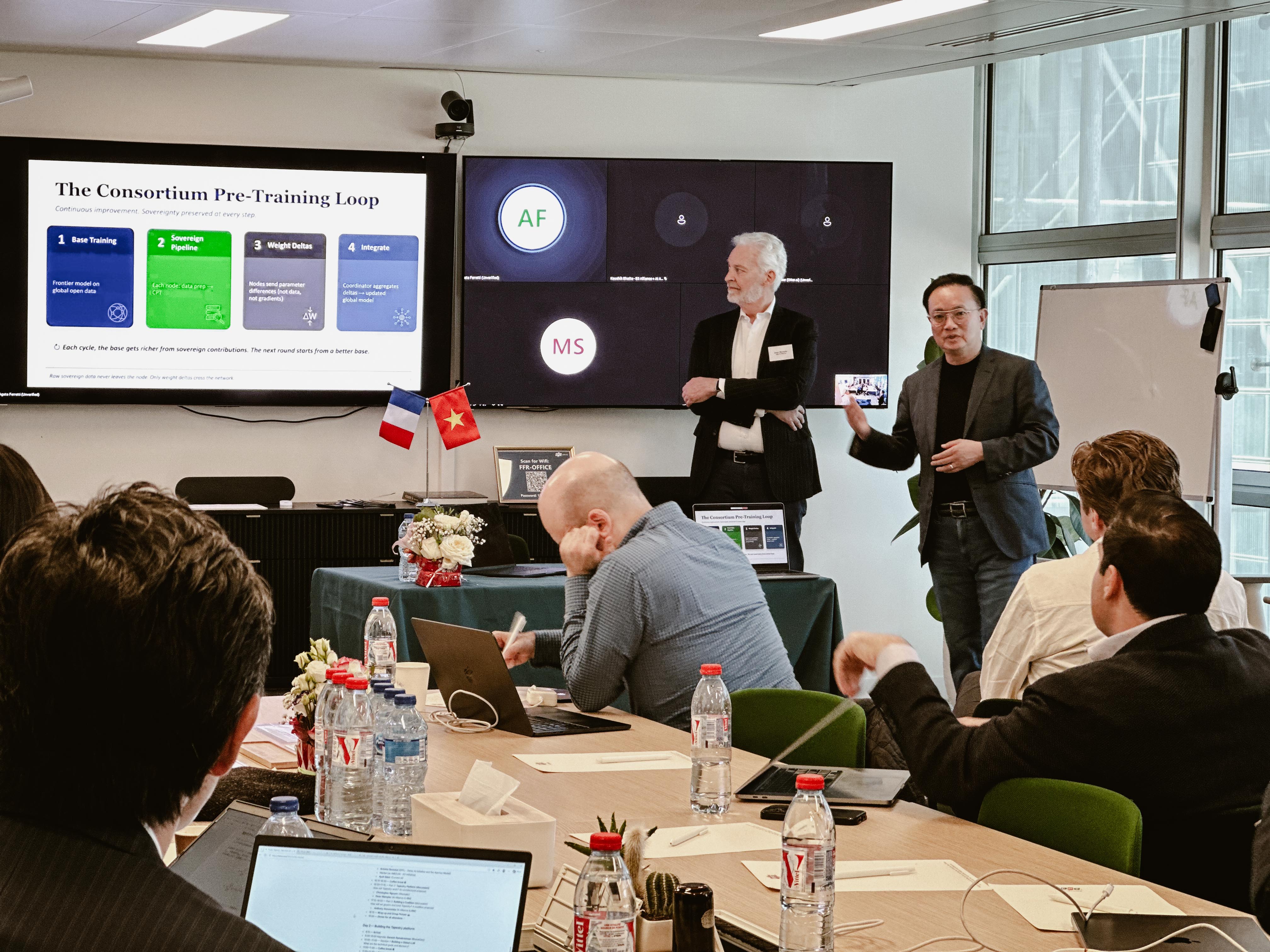
"Anti-capture is the general term. You can't participate and then have things yanked from you because somebody changed their business model or their strategy. We want to enforce the notion of sovereignty through the architecture and not just policy."
— Christopher Nguyễn, Aitomatic
The key principle is that sovereignty cannot depend only on trust, contracts, or policy. It has to be protected by architecture.
Dean Wampler
AI Alliance & IBM · Architecture Co-lead
Dean Wampler walked through the engineering mechanics needed to operationalize anti-capture.
The architecture requires more than simply averaging model updates. It needs a contribution process that can be reviewed, audited, versioned, and governed. Wampler discussed weight-delta aggregation, cycle frequency tradeoffs, versioned contribution history, rollback of individual deltas, maintainer-style review rights, and lessons borrowed from open-source software governance.
The broader point was that algorithmic safeguards alone are not sufficient. The operating model has to enforce the same property the architecture enforces: collaboration without capture.
Anthony Annunziata
AI Alliance & IBM · Day 2 Close
Anthony Annunziata closed Day 2 by defining the path forward as two parallel tracks.
The first is technical: select a starting model, identify a bootstrapping team, open public GitHub work, run distributed weight-update experiments, and demonstrate culturally grounded training and evaluation. The second is organizational: build the governance, fundraising, legal structure, contribution processes, and operating model needed to support a durable international coalition.
The ask to attendees was concrete: identify technical contributors who can engage now, and identify partners who can help structure, fund, and sustain the coalition. The workshop ended with a clear sense that Tapestry must now become a working project, not just a compelling idea.
The architecture: shared base, sovereign nodes
Across the workshop, the emerging architecture became clear.
Tapestry begins with a shared base model. Participating sovereign nodes receive that base and continue training it on their own data, under their own controls. Instead of sending raw data back to a central lab, participants can return model updates, the improvements learned from local training, for review, aggregation, and incorporation into the shared base.
The updated base can then be redistributed, and the cycle repeats.
Fine-tuning, domain specialization, cultural grounding, safety work, and deployment can happen locally, in each sovereign pipeline. Participants can maintain their own derivatives, aligned to their own laws, languages, industries, institutions, and communities.
The architecture is designed to support both collaboration and independence: a shared frontier-capable foundation, plus sovereign derivatives that remain controlled by their owners and users.
The data advantage: diversity, not just volume
Tapestry's advantage is not simply "more data."
Closed frontier labs have already trained on enormous volumes of public web data. The next frontier of capability will increasingly depend on data that is more diverse, more authentic, more domain-specific, more culturally grounded, and often not freely available on the open web.
That includes national language data, cultural heritage data, scientific and technical corpora, industrial data, operational data, and institutional knowledge held by organizations that cannot or should not hand it to a centralized provider.
The workshop explored a spectrum of contribution models: open data that can be freely shared; data the consortium can train on but not redistribute; data that remains on local compute, with only model updates shared back; and data used entirely within sovereign derivatives the consortium never sees.
This flexibility is essential. Different contributors have different legal obligations, commercial sensitivities, cultural responsibilities, and sovereignty requirements. Tapestry is designed to let them collaborate without forcing them into a single data-sharing model.
The road ahead
Two parallel tracks are now in motion.
The first is technical. Initial milestones include a cultural realignment demonstration, a distributed weight-update experiment across two or more nodes, a global data catalog, early pull requests into the public Tapestry GitHub repository, and selection of a starting model and bootstrapping team.
The second is organizational. The AI Alliance is working to shape the governance, fundraising, legal, and operating model needed to support a durable international coalition.
Both tracks are intended to be open, practical, and contributor-driven. The goal is not to spend years designing the perfect institution before technical work begins. The goal is to build the technical and organizational foundations together, with the right safeguards in place from the start.
By next year, we expect to see the first sovereign Tapestry models begin to emerge: national models, regional models, industry models, domain models, and culturally grounded language models, each backed by a shared base and each adapted to its own needs.
"Conversations across five continents have moved from interest to commitment. New partners are coming to the table with data, compute, and the vision to back it. We'll have more to announce soon."
— Kaushik Bhatta, AI Alliance & B3 Alliance
How to get involved
Project Tapestry is forming now
Help build sovereign AI with frontier capability.
We are looking for researchers, model builders, data stewards, compute providers, governments, cultural institutions, open-source contributors, and industry partners.
Website thealliance.ai/projects/tapestry GitHub github.com/The-AI-Alliance/tapestry Training Data Proposals thealliance.ai/projects/tapestry/training-data-proposalsThe coalition is forming now.
The table is being set.
The future of sovereign frontier AI should be built by many.
Acknowledgments
Workshop attendees, in Paris and online
Our sincere gratitude goes to every workshop attendee for their vital insights and the shared energy they brought to the launch of this collective endeavor.
| Agata FerrettiIBM / AI Alliance | Aw Ai TiA*STAR I²R |
| Alexander DrouinServiceNow | Alexander LacosteServiceNow |
| Alexandra NguyenAitomatic | An LuongVantage AI |
| Anastasia StasenkoPleias | Ankit BoseNasscom |
| Anthony AnnunziataIBM / AI Alliance | Antoine BosselutEPFL |
| Arno AmabileCurrent AI | Ayah BdeirCurrent AI |
| Bapi ChatterjeeIIIT-Delhi | Christopher NguyễnAitomatic |
| Da-shan ShiuMediaTek Research | Dave BuckleyOpenMined |
| Dean WamplerAI Alliance / IBM | Eric XingMBZUAI / IFM |
| Erik NordenZyphra | Ganesh RamakrishnanBharatGen |
| Greg LindahlCommon Crawl | Guokan ShangMBZUAI |
| Hector LiuMBZUAI | Hideki HanamiIPA Japan |
| Irina BejanOpenMined | Isabelle RylPRAIRIE |
| Jian Gang NguiAI Singapore | Jie TangGLM |
| Kaushik BhattaAI Alliance / B3 Alliance | Laurent MassouliéINRIA |
| Maneesh K. SinghBharatGen | Martin TisneAI Collaborative |
| Michitaka TsudaJapan METI | Nick BookerIndoGenius |
| Niles BurbankAMD | Pascale FungAMI Labs |
| Pedro Ortiz SuarezCommon Crawl Foundation | Phong NguyenFPT |
| Rick StevensArgonne National Laboratory | Rishi BalBharatGen |
| Ritwik BanerjeeStony Brook University | Roberto Di CosimoSoftware Heritage |
| Sebastian MajstorovicEleutherAI | Vincent CaldeiraRed Hat |
| Yann LeCunAMI Labs | Ziv IlanNVIDIA |